ROOTED HERE
The history of Manchester
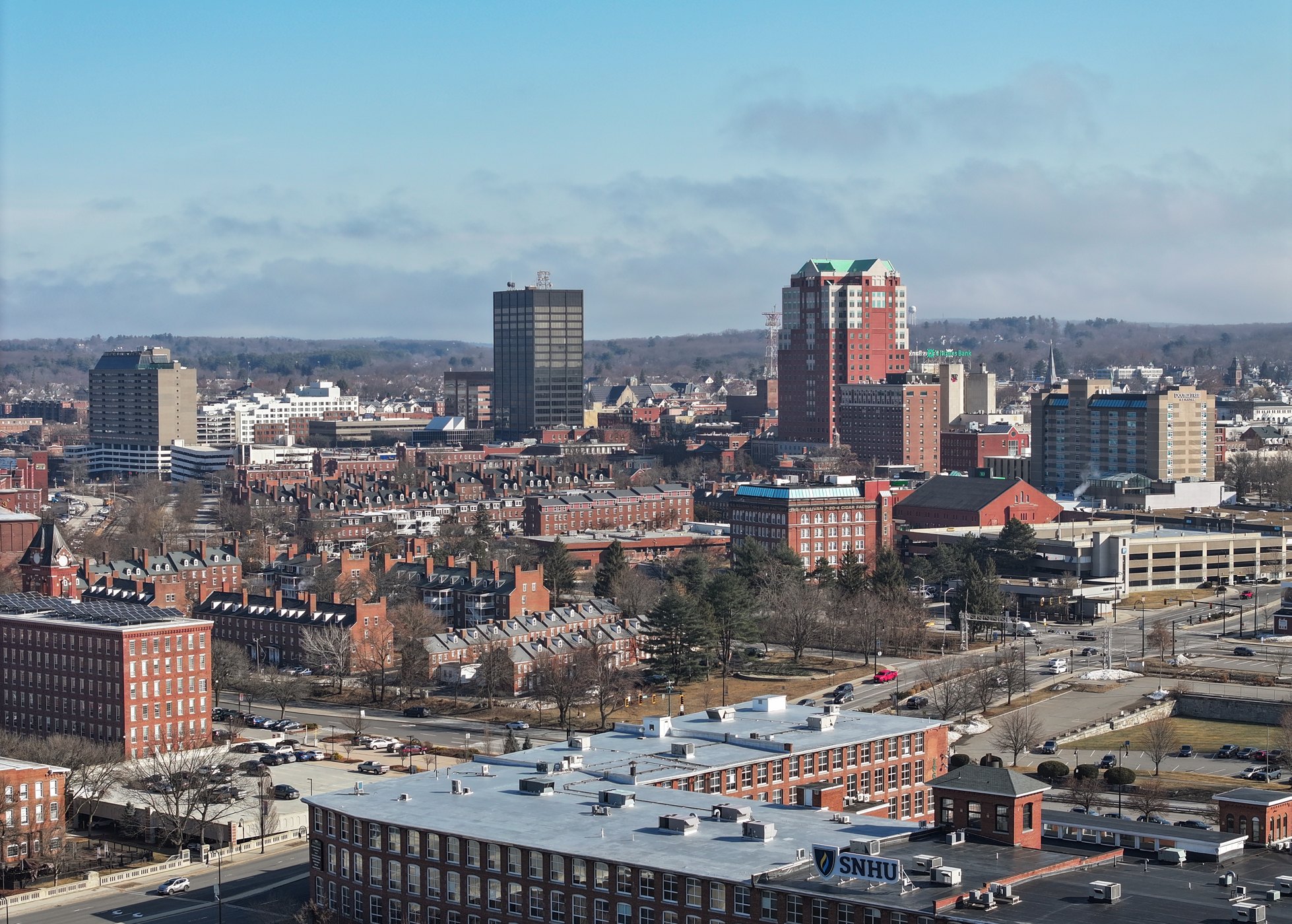
Manchester grew beside the Merrimack River and the Amoskeag mills. Elm Street, the Millyard, the Currier Museum and the Palace Theatre connect its industrial history with local culture.
People who shaped Manchester
These milestones are an introduction, not a complete local history. Follow the linked city and museum sources to explore the people and places behind them.Read the local historical account.
Watch the city’s history

FROM THE ARCHIVES
Minuteman Tales: Manchester, New Hampshire
The Boston & Maine Railroad Historical Society explores Manchester's surviving railway history.
Watch on YouTube ↗
FROM THE ARCHIVES
Millyard Walking Tour
The Manchester Historic Association’s walking tour of the Millyard developed by the Amoskeag Manufacturing Company, recorded by Manchester Public Television.
Watch on YouTube ↗
FROM THE ARCHIVES
Frank Lloyd Wright's Zimmerman and Kalil Houses
Weekends with Yankee tours the Zimmerman and Kalil houses, the two Frank Lloyd Wright Usonian homes now cared for by the Currier Museum of Art.
Watch on YouTube ↗Famous people born in Manchester
See all 48 famous people


- Before the colonial town
Namoskeag
Amoskeag Falls takes its name from the Pennacook word Namoskeag, roughly “good fishing place.” Native people fished its migrating sturgeon, alewife and salmon, with significant settlements on the bluffs east of the river.
Wikipedia: Amoskeag Falls ↗ - 1751
The Derryfield charter
The colonial town received its charter under the Derryfield name. This earlier municipality preceded the industrial city that later developed along the Merrimack River.
City of Manchester ↗ - 1810
The Manchester name
Derryfield changed its name to Manchester on June 13. The name reflected Samuel Blodget's ambition for an industrial community modeled on the English manufacturing city.
City of Manchester ↗ - 1831–1838
Amoskeag plans a city
Massachusetts investors who bought the mill in 1825 incorporated the Amoskeag Manufacturing Company in 1831. Its engineers and architects planned a company town on the east bank, founded in 1838 with Elm Street as its main thoroughfare.
Wikipedia: Manchester, New Hampshire ↗ - 1846
City government
Residents sought a city charter, and Hiram Brown won the first mayoral election in September. Manchester's government developed around a mayor and board of aldermen.
City of Manchester ↗ - 1880
The mill girls
One third of Manchester’s population, 3,385 women, worked in the textile mills of the Amoskeag Manufacturing Company. The Mill Girl sculpture near the Millyard, dedicated in 1988, honors them.
Historical Marker Database: The Mill Girl ↗ - 1915
The Palace Theatre
Greek immigrant Victor Charas began building the Palace Theatre in June 1914, and it opened on April 9, 1915. Vaudeville performers including Harry Houdini and the Marx Brothers later played its stage.
Palace Theatre ↗ - 1922–1935
Labor conflict and the mill economy
A nine-month Amoskeag strike in 1922 challenged wages and working hours. The manufacturing company declared bankruptcy on Christmas Eve 1935, a major turning point for the mill city.
City of Manchester ↗ - 1936
The Great Flood
The Great Flood of 1936 destroyed the McGregor Bridge and caused $2.5 million in damage to the city’s mills and buildings. Afterward, the Amoskeag company reorganized out of bankruptcy as Amoskeag Industries and brought new industries to the Millyard.
Wikipedia: Manchester, New Hampshire ↗ - 1997
Restoring City Hall
The city completed a major restoration of City Hall. The project preserved a civic landmark while adapting it for continued public use.
City of Manchester ↗
See the history for yourself.
Check current opening hours and visitor information before you go: Currier Museum of Art.
For local services and public information, the local government website is a starting point. For historical research, consult local libraries, archives and museums and check collection-specific image permissions.
Selected milestones from the linked historical sources. This is an introduction, not a complete account of the city’s history.